
Client: Kirk Connally of Tabor Lane
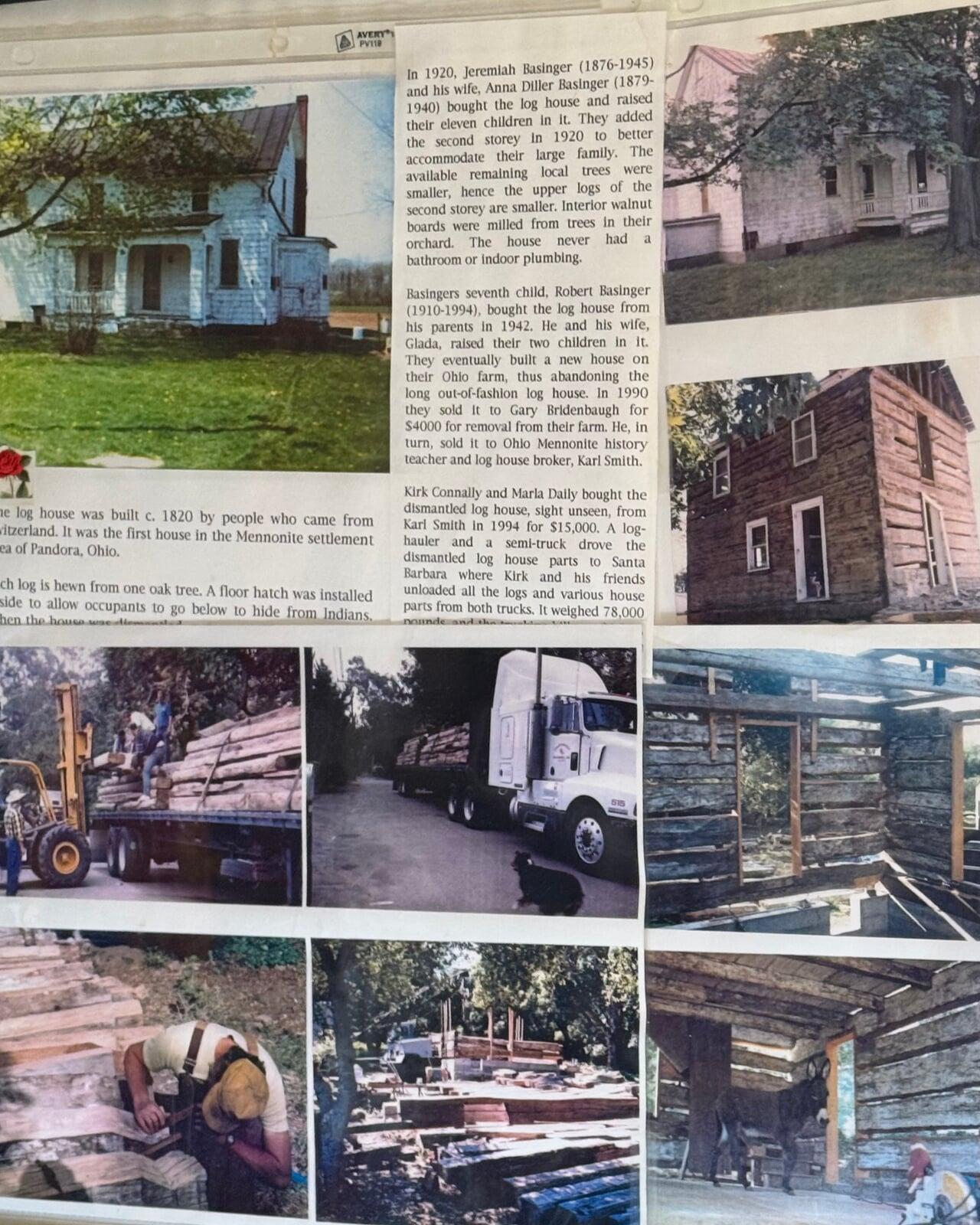
The first home built in an Ohioan Mennonite settlement, circa 1820, has lived a longer life that it could've hoped for- and recently found its forever plot on Montecito soil. The cabin started with one floor built from a single oak tree. 100 years later, the second story was added to accommodate an 11 person family. This level was made with smaller walnut wood from the family's orchard. At this point, the house was still absent of indoor plumbing.
From them it passed to an Ohio Mennonite History teacher and log-house broker. Connally's acquaintance and "Renaissance Man" Richard Henley not only had his own cabin that sparked the interest, but knew this teacher at the time of selling. People in the Midwest aren't as fond of log cabins as we are on the West Coast. The romance has faded. So when the offer came in sight unseen, our teacher friend gladly put the money towards a stucco house. The log cabin was packed up and delivered to California pending permits.
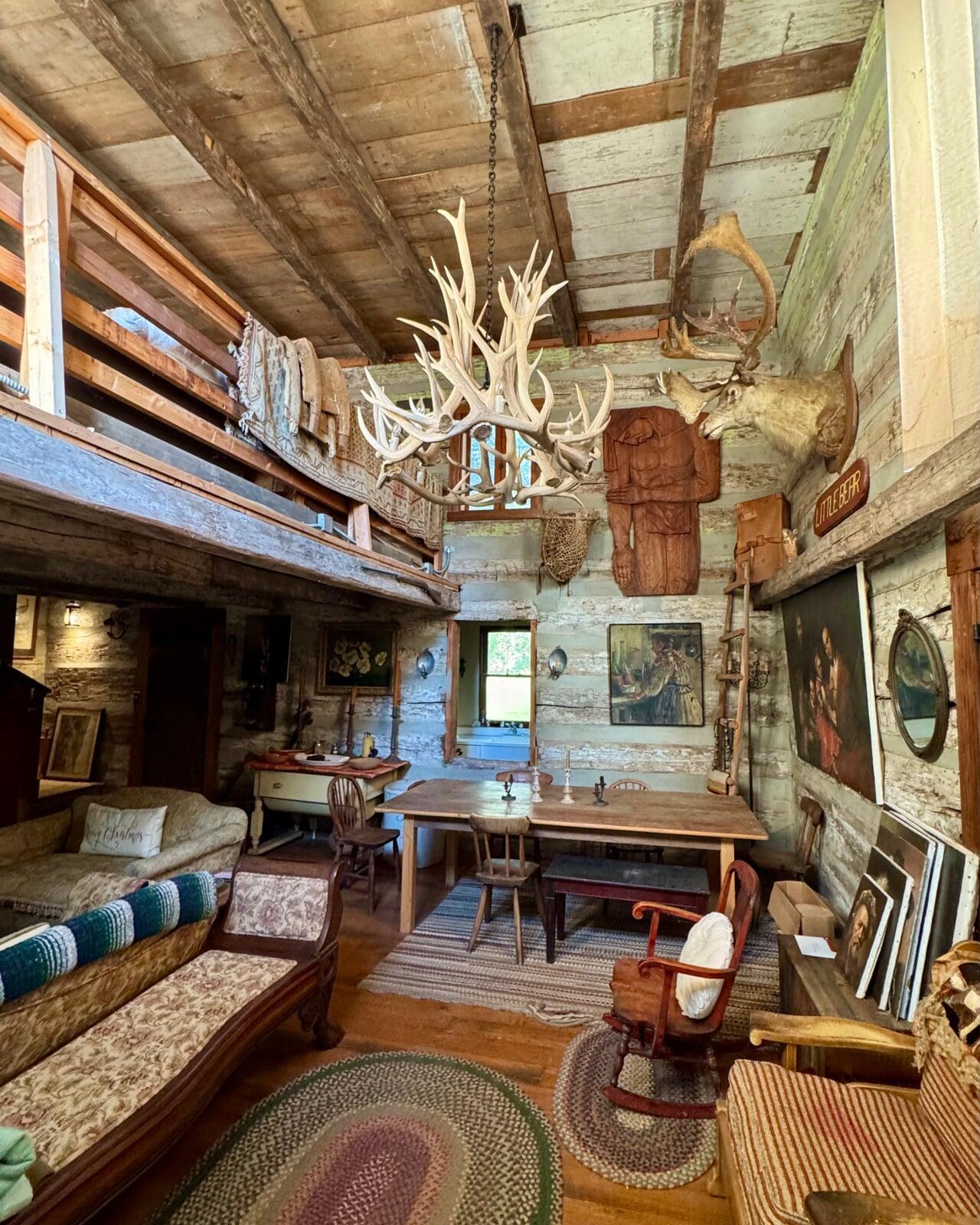
Putting it back together took 2 years, a crane, and lots of help from friends. Connally personally put months of work into reconditioning each log. Him and his wife are passionately positioned in the field of preservation, Maria Daily herself starting the Santa Cruz Island Foundation. They help each other with these endeavors, and have slowly turned this cabin guesthouse into a trove of artifacts and period pieces. 14 pairs of elk antlers were donated from Santa Rosa Island for the custom chandelier. The caribou head that hangs proudly made its own journey from Alaska.
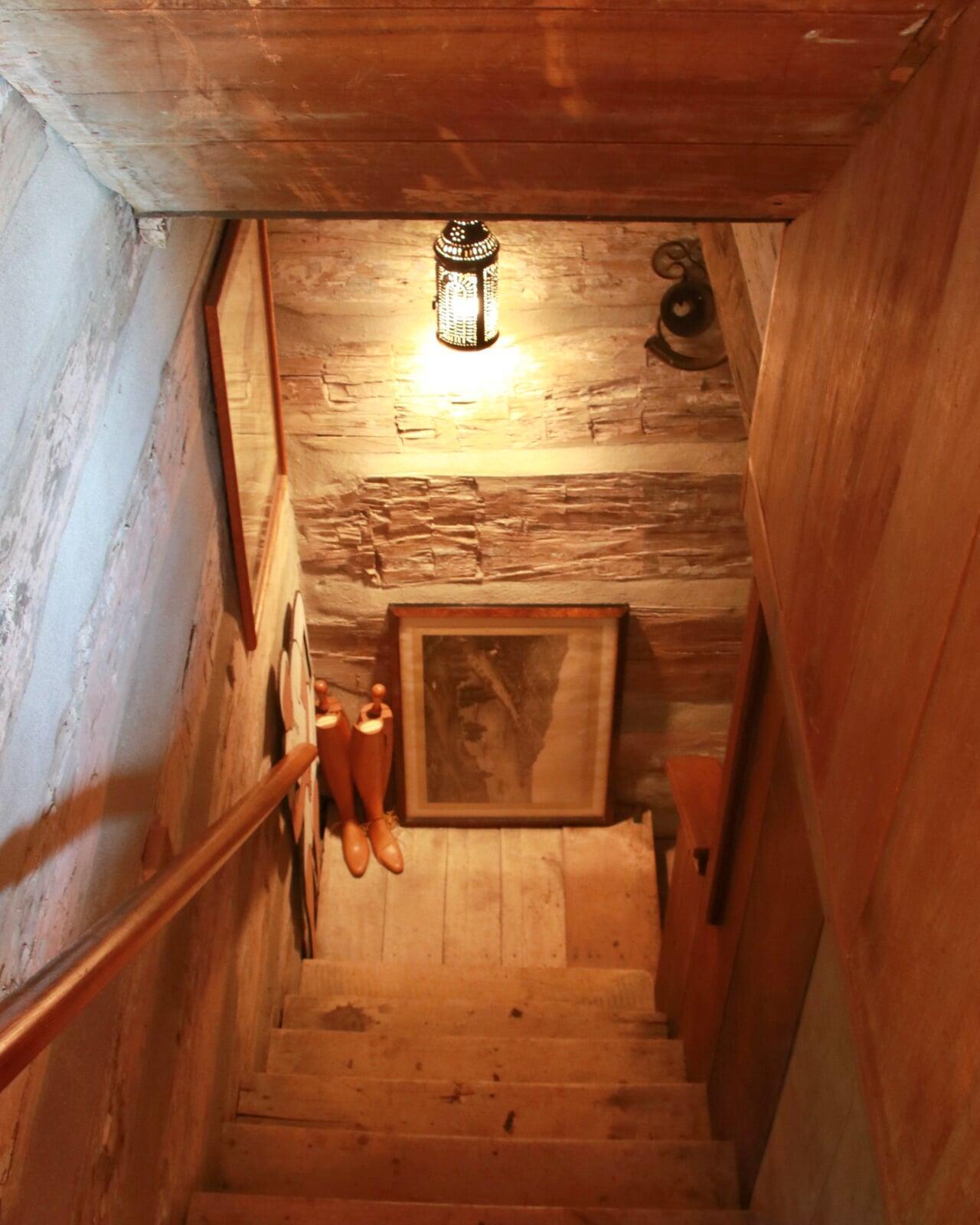
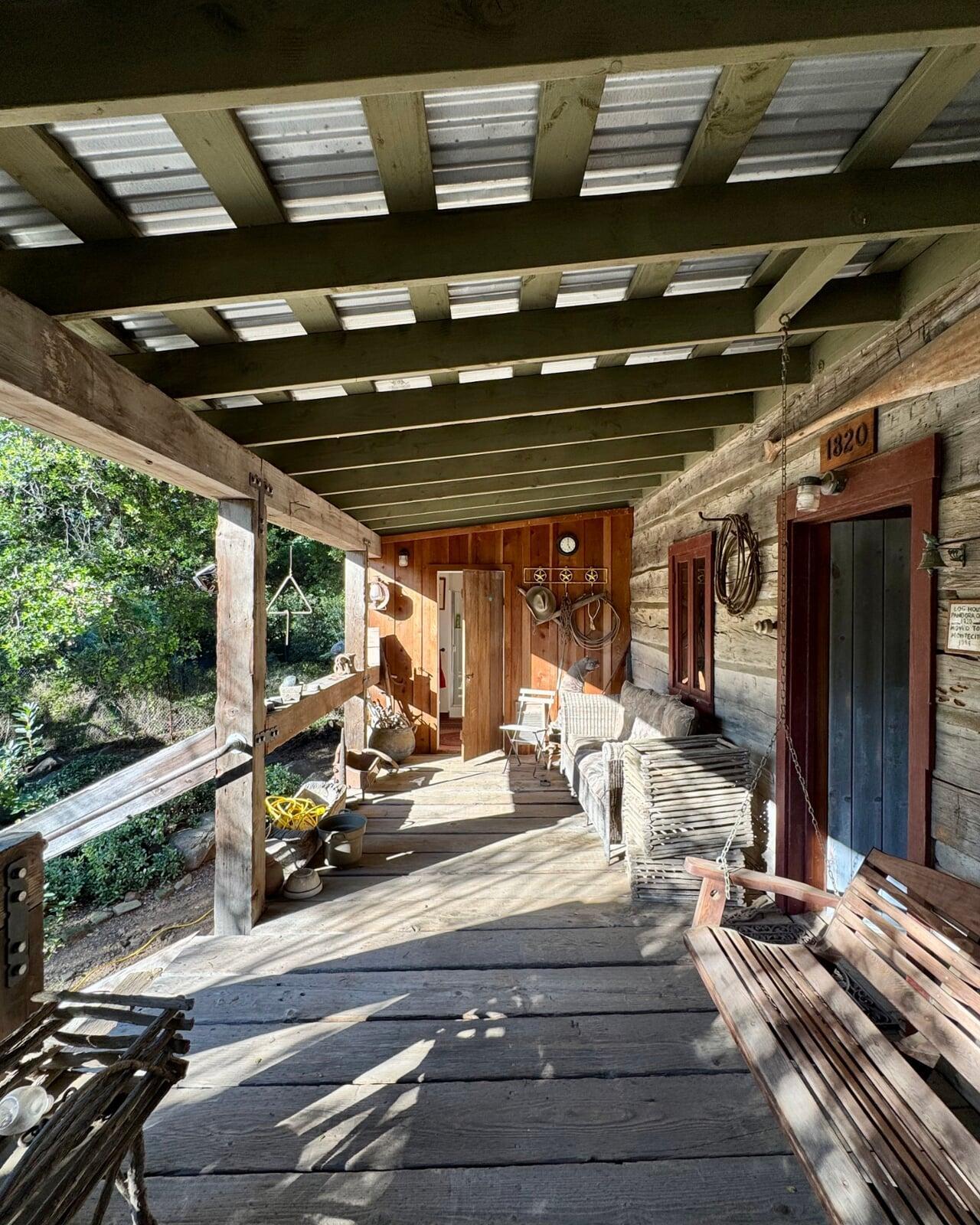
The property that the cabin sits on is also riddled with history. It was originally a 14-acre ranch that went into the East Valley. The cowboys that worked it sold honey and offered $7.50 mule rides up into the hills behind Montecito. Kirk even found a brochure on property that advertises the rides. His home was the last piece of this ranch to be separated and sold. His goal to keep the cabin as close to its original state as possible honors both its centuries of inhabitants and the land it now rests on. It shows that when a client is involved with our regional history, they understand that the goal is not to modernize the structure into something unrecognizable, but to allow it to continue telling its story.
Our role in this project was rooted in the same philosophy. See our portfolio for information on how we protected the building during the painting process. Restoration takes more than technical skill. It takes patience and restraint, focusing on finishes that reinforce instead of conceal. At Purple Painting, we approach historic projects with the same level of care we bring to Santa Barbara's most recognizable civic buildings. Whether it be the Courthouse, Central Library, or a private cabin with deep roots, our responsibility remains the same: to protect buildings and help them endure.